“I am proud of my team of having kept the Mission safe during the COVID-19 pandemic”
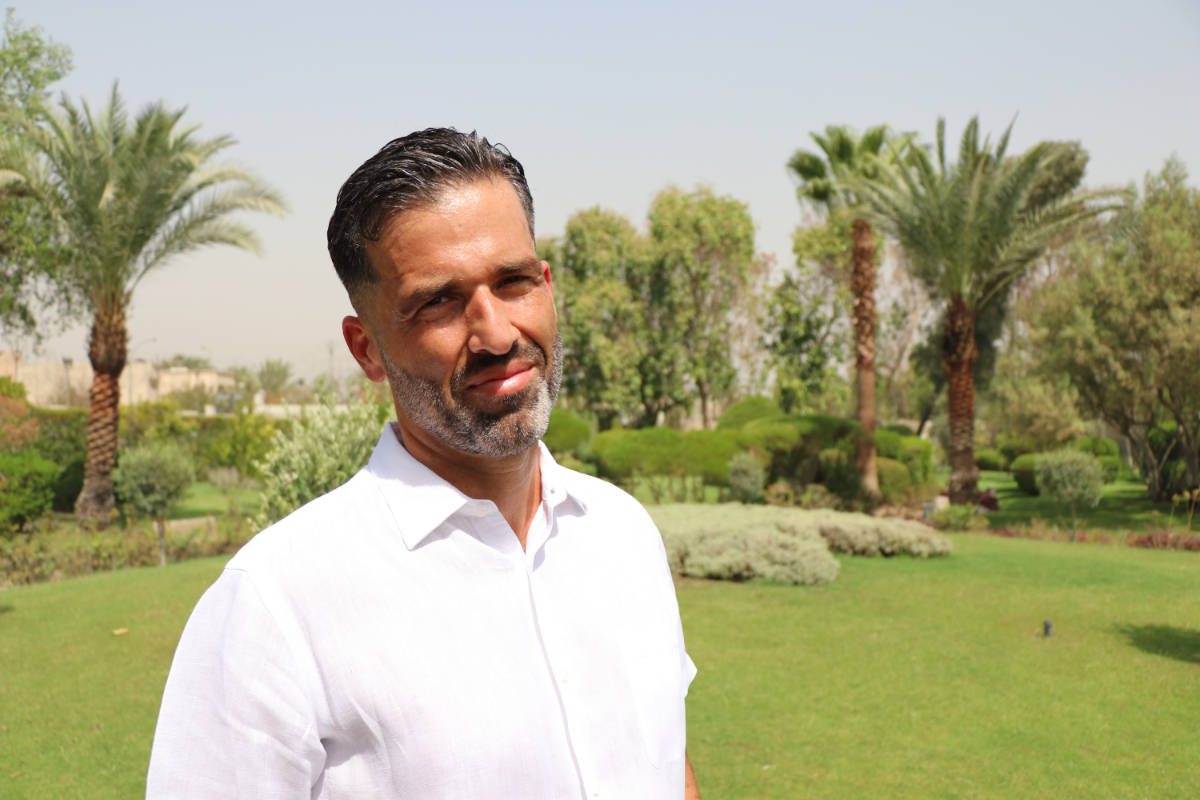
Luis Miguel Valente from Portugal is a nurse and has dedicated himself to this profession since 1995. He is an expert in emergency medicine and has specialized in obstetric health. After having acquired more than 20 years of experience working as a nurse in Portugal, he joined United Nations Multidimensional Integrated Stabilization Mission in Mali (MINUSMA) as part of an aeromedical evacuation team in Timbuktu where he stayed until joining EUAM Iraq in 2019.
Tell us about your daily work?
My job requires me to be available 24/7 and have a constant readiness for medical emergencies and other urgent matters. I manage EUAM Iraq’s Medical Unit in terms of its human, material and economic resources. Our unit provides medical advice and guidance to all the Mission staff. We are assisting and advising on all kinds of medical and welfare matters. We also assure that all medical contingency and emergency plans are in place and up to date.
We provide medical trainings to staff, we cover triage and life-saving skills such as first aid, CPR, and the use of the automated external defibrillator. If needed, we also cater more in-depth certified courses in some areas like trauma or emergency.
In addition, we monitor the epidemiological and overall medical situation in the Mission area of operation. For example, now as our Mission is expanding its presence to Erbil in the Kurdistan region of Iraq, we also need to have a closer overview of the epidemiological situation there, in addition to the Baghdad region.
My daily work is all about searching solutions through teamwork in our department, as well as engaging with the Civilian Planning and Conduct Capability (CPCC) in Brussels, the operational headquarters for European Union civilian crisis management missions such as EUAM Iraq.
How do you find working with colleagues from many different backgrounds?
I believe that working in a multicultural environment broadens our worldview. Not only can we enjoy the companionship of amazing coworkers, but it is an ongoing opportunity for learning, progress, and growth in terms of different work habits, organizational strategies, and approaches to conflict resolution.
By acquiring a deeper knowledge on different cultural backgrounds, including religion as well as diverse family or country traditions, we can promote understanding and beat stereotypes. This creates a workplace where different perspectives are valued and embraced. It also cultivates diversity and inclusiveness at the workplace.
I truly feel that finding common ground in a cross-cultural environment and learning from each one is what helps modern organisations to thrive and succeed.
What has been the most rewarding or memorable experience for you in the Mission so far?
I feel that the Mission has given me plenty, but it is also important for me to give back. It has been rewarding to realise that within my skills and capabilities I have been able to contribute to keeping the Mission safe in very challenging times. The medical unit has been developing protocols and guidelines in order to keep the Mission members safe.
How are you promoting a healthy working culture and the wellbeing of staff?
In the EUAM Iraq medical team, we try to implement aspects of preventive as well as occupational medicine. This also means raising awareness about health-related campaigns through the so called ‘World Health Days’. For example, we have shared specific topic-related information on the World Day of Hepatitis, World Day of Blood Pressure, World COPD Awareness Day dedicated to pulmonary diseases, etc. Raising awareness and sharing simple practical advice can allow our colleagues to pay more attention to their health and to take better care of themselves.
There’s the Latin saying: mens sana in corpore sano – mental wellbeing is connected to physical wellbeing.
That’s so true! We also try promote and improve the physical and mental wellbeing of Mission members by organizing regular sports activities such as cross-training and yoga. In Baghdad, we live and work in an environment where the temperatures are always high so our Mission members need to be in good health to be able to cope with the challenging setting. Practicing sports helps a lot. It also has an impact on morale, team building and even mental awareness as well as supporting physical health. It provides a possibility to leave behind the stress of the working day.
What else is on your mind to continue supporting your colleagues?
Peer support is one of the many projects that we have tried to initiate. Having colleagues trained and ready to provide psychological support when needed is something that can make a huge difference, especially in high-risk mission settings where you are out of your culture, away from your family and circle of friends.
What is something your colleagues don’t know about you?
During my student years, I spent several summers working as a lifeguard on the beach.